
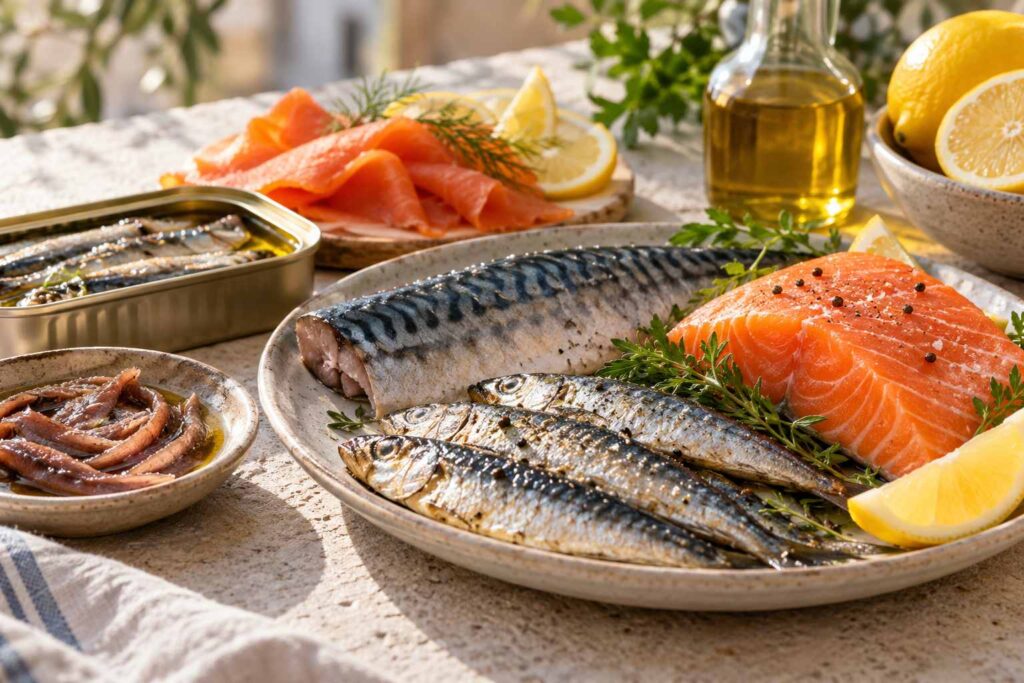
“Sometimes, the best way to look after our diet is to return to the foods we’ve always known.”
— NourishMum
In a Mediterranean kitchen, sardines on the grill, baked anchovies or a lovely piece of mackerel should feel just as familiar as a plate of vegetables or some boiled potatoes.
Yet, while omega-3 supplements are becoming increasingly popular, we sometimes forget that one of the best natural sources is already within easy reach: oily fish.
And we don’t have to think only of salmon. Sardines, anchovies, mackerel and horse mackerel are traditional, versatile and, in many cases, relatively affordable foods.
But what makes their fats so special? Do all oily fish provide the same amount? Can we lose omega-3 when cooking them? And is there anything we can do to help our bodies make better use of it?
Let’s find out.
What Are Omega-3 Fatty Acids, and Why Do We Need Them?
Omega-3 fatty acids are a family of polyunsaturated fats that perform important functions in our bodies.
The three best-known types are:
- ALA (alpha-linolenic acid): found mainly in plant foods such as walnuts, flaxseeds and chia seeds.
- EPA (eicosapentaenoic acid): found primarily in fish and other marine foods.
- DHA (docosahexaenoic acid): also abundant in certain fish and particularly important for the brain and retina.
ALA is an essential fatty acid, meaning we need to obtain it from our diet because our bodies cannot produce it.
We can convert a small proportion of ALA into EPA and DHA, but this conversion is limited, particularly when it comes to DHA.
That’s why, although walnuts and seeds are nutritious foods, they don’t provide exactly the same omega-3 fatty acids as oily fish.
EPA and DHA are part of our cell membranes and take part in numerous physiological processes. Getting enough of them is particularly relevant during stages such as pregnancy and childhood development.
Regular fish consumption has also been associated with better cardiovascular health, although that doesn’t mean eating more fish will, by itself, prevent every disease.
Why Is Oily Fish Such a Valuable Food?
The main difference between white fish and oily fish lies in their fat content.
White fish, such as hake or cod, generally contain very little fat. Oily fish have a higher proportion, although the amount varies depending on the species, season and what the fish has been eating.
And it’s precisely in this fat that we find significant amounts of EPA and DHA.
But there’s something worth remembering: oily fish offers much more than omega-3.
It also provides high-quality protein, vitamin B12, selenium and, depending on the species, useful amounts of vitamin D and other nutrients.
In other words, when we eat a sardine, we’re not simply getting a dose of omega-3. We’re eating a whole food.
Which Oily Fish Should We Choose?
There’s no need to look for exotic species or spend a fortune. Some of the most interesting choices have been part of our traditional cooking for generations.
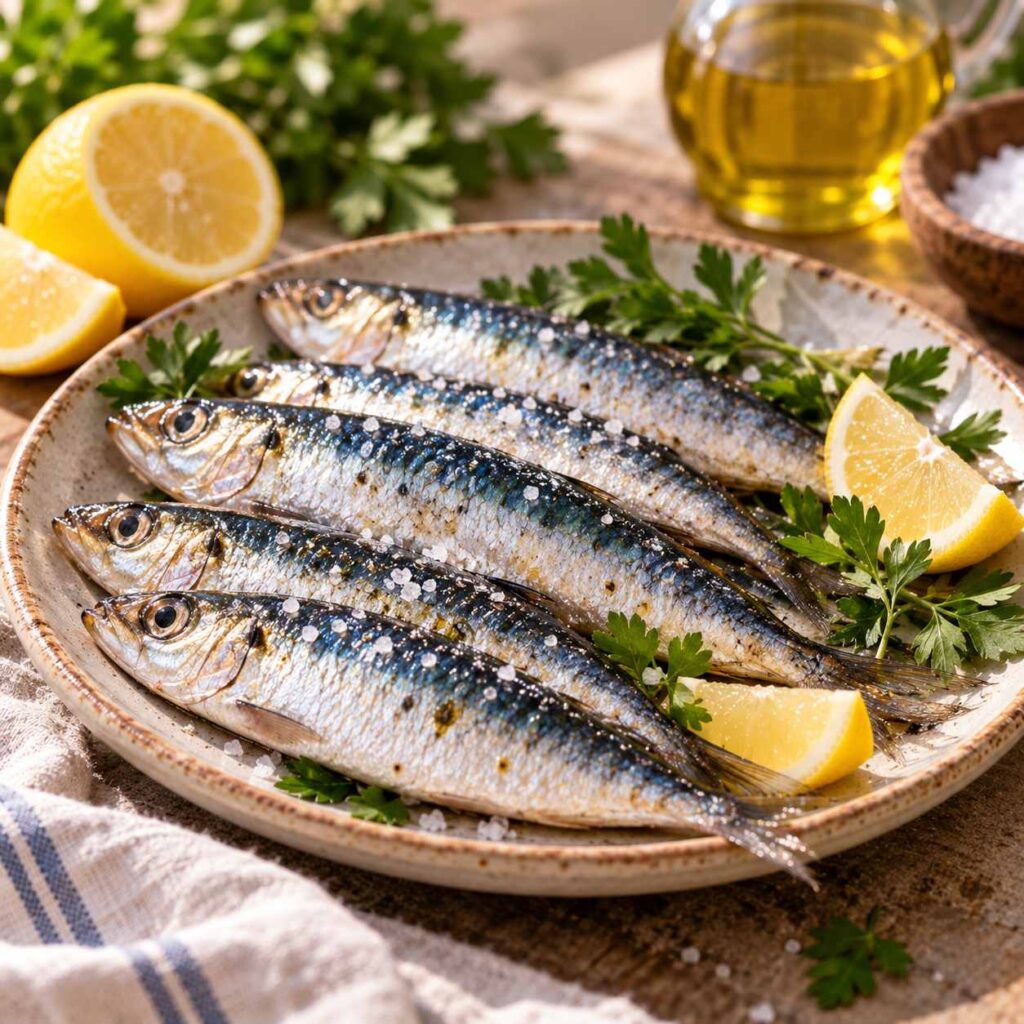
Sardines
An excellent source of EPA and DHA. They’re tasty, versatile and generally inexpensive. When eaten tinned with their softened bones, they also provide calcium.
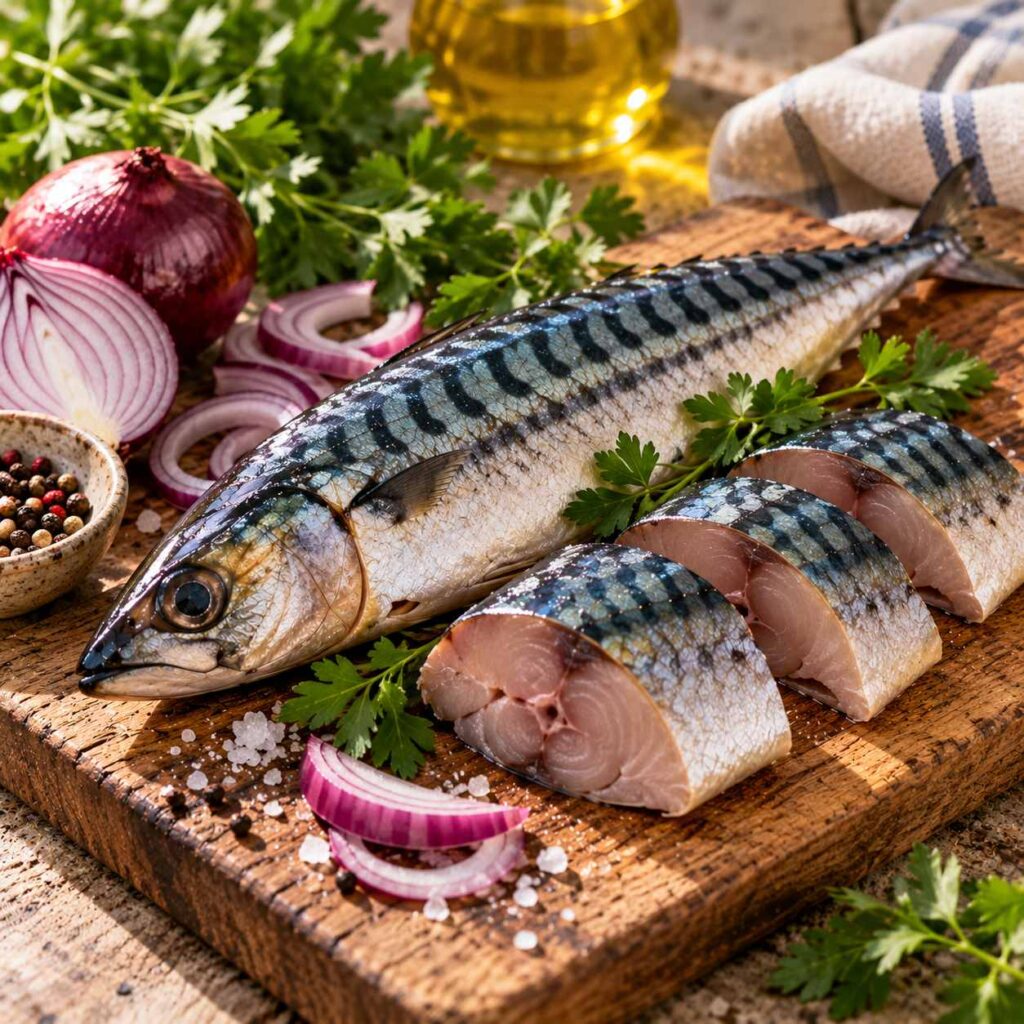
Mackerel
Rich in healthy fats and full of flavour. It can be baked, grilled or eaten tinned. It’s worth distinguishing Atlantic mackerel from other species sold as mackerel, as their mercury levels can differ.
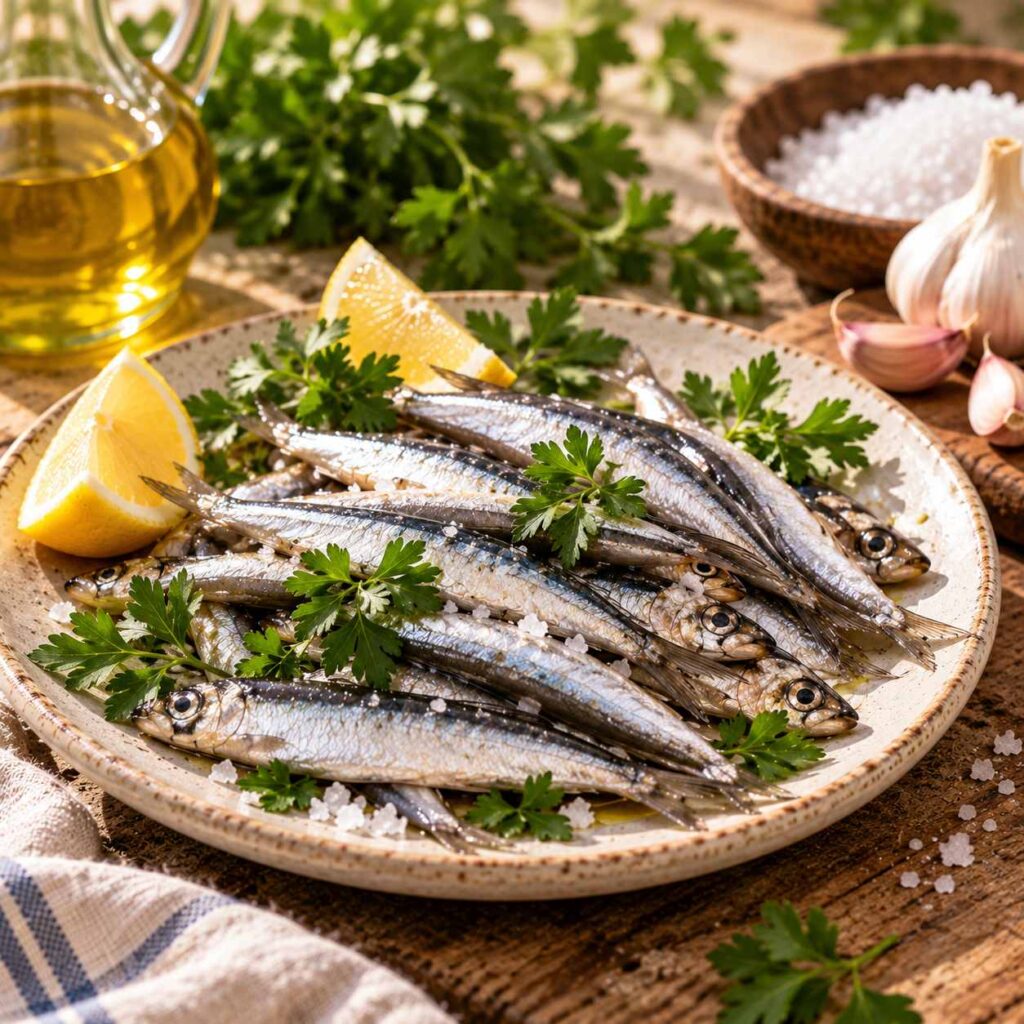
Anchovies
Small fish that feature prominently in Mediterranean cooking. We can bake them, grill them or prepare them in other traditional ways. Their omega-3 content varies, but they’re a worthwhile choice.
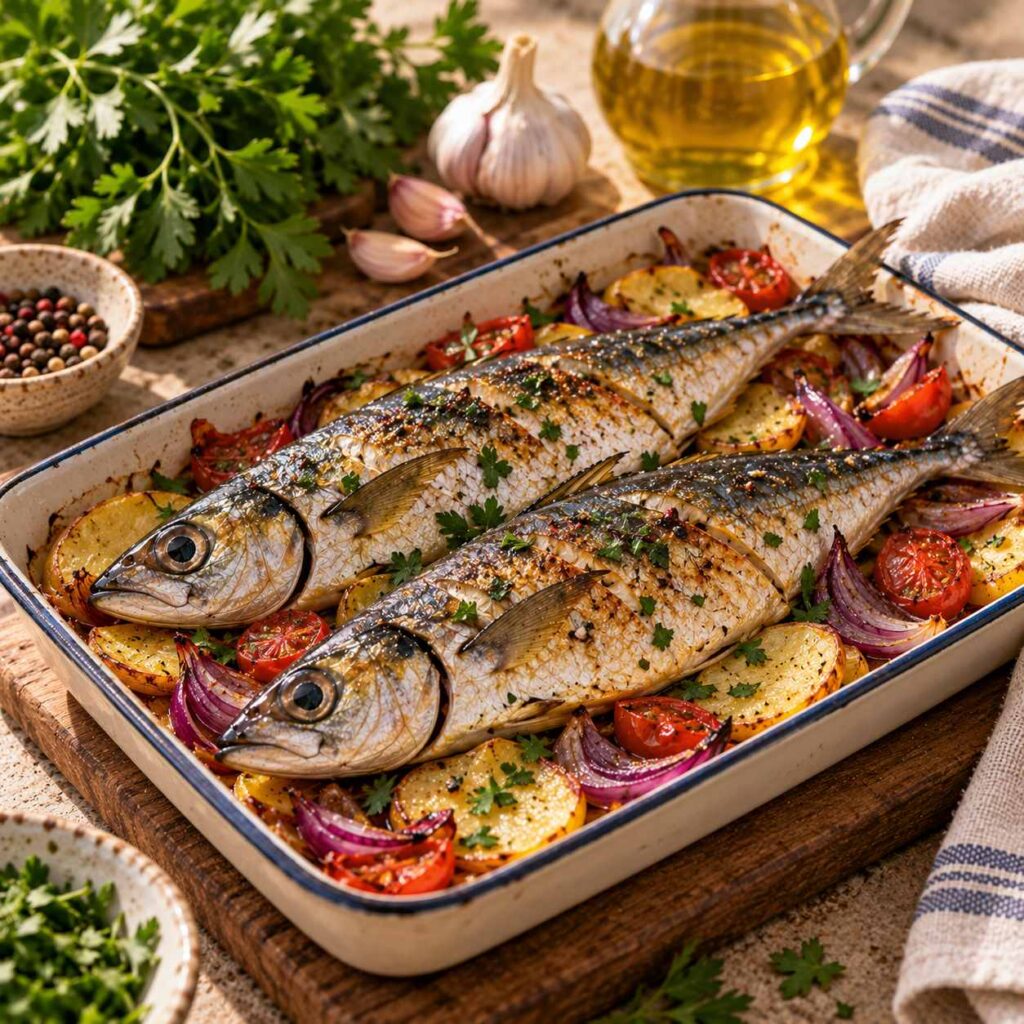
Horse mackerel
Another traditional oily fish that is sometimes overlooked. It’s particularly tasty baked and offers a good way to vary the species we eat.
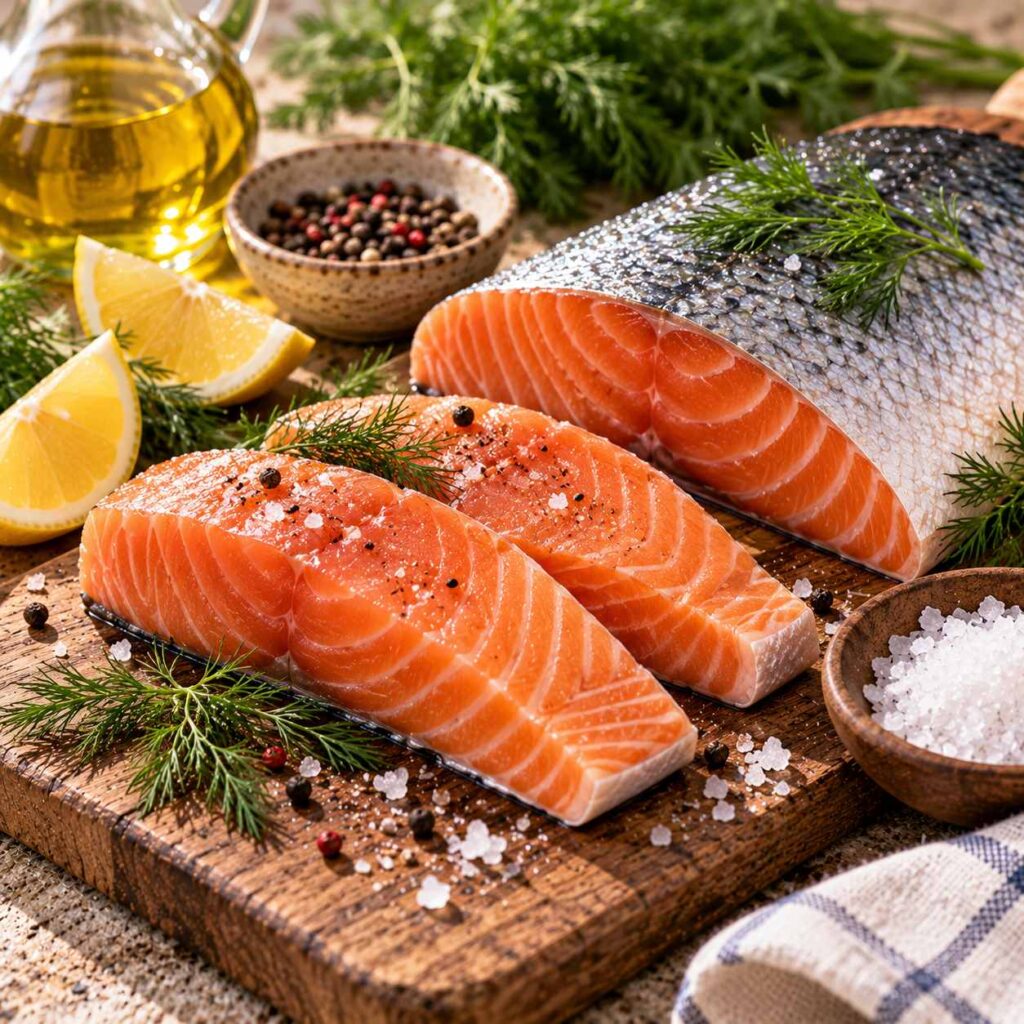
Salmon
A well-known source of EPA and DHA that’s easy to prepare and include in different meals. Its fat composition can vary depending on whether it’s wild or farmed, as well as what it has been fed.
We don’t always need to choose the fish with the highest omega-3 content per 100 grams. Variety, availability, price and our own preferences matter too.
And many smaller fish have an additional advantage: they generally accumulate less mercury than large predatory species.
How Much Oily Fish Should We Eat?
The Spanish Agency for Food Safety and Nutrition (AESAN) recommends eating three to four portions of fish a week, alternating between white and oily fish.
That doesn’t mean we should eat oily fish four times a week.
A simple way to organise our meals might be to include oily fish twice a week and choose other types of fish for the remaining meals.
For example, sardines one day and salmon another, with hake or sea bream on other days.
The appropriate amount also depends on age, individual nutritional needs and portion sizes.
As a nutritional reference, the European Food Safety Authority (EFSA) considers an intake of around 250 mg of EPA and DHA combined per day adequate for healthy adults. This is an average reference intake, not an exact amount we need to measure every day.
What matters is our overall eating pattern, rather than achieving a perfect number at every meal.
Can We Improve Omega-3 Absorption?
This is one of the most interesting questions.
Omega-3 fatty acids are fats and, like other dietary fats, they’re digested with the help of digestive enzymes and bile before being absorbed in the intestine.
Under normal circumstances, the fats in fish are absorbed efficiently.
We sometimes read that omega-3 should be consumed alongside fatty foods to improve absorption. There’s some scientific basis for this advice, but it needs a little context.
Some studies have found that certain fish oil supplements, particularly those containing omega-3 in the form of ethyl esters, are absorbed better when taken with a meal containing fat.
But that doesn’t mean we need to add oil or avocado to oily fish to absorb its omega-3 properly.
Oily fish already contains fat naturally.
There’s also no strong evidence that combining it with lemon, pepper or any particular ingredient significantly increases the absorption of its EPA and DHA.
We can add lemon because we enjoy the flavour, or olive oil because it’s part of our cooking, but there’s no need to turn a simple meal into a complicated nutritional formula.
The best approach is much less sophisticated: eat oily fish regularly, prepare it properly and enjoy it as part of a varied diet.
What's the Best Way to Cook Oily Fish?
Omega-3 fatty acids are polyunsaturated fats, which means they can oxidise when exposed to heat, oxygen and certain storage conditions.
That doesn’t mean cooking fish automatically destroys its benefits.
In fact, cooked fish can still provide significant amounts of EPA and DHA.
What we do know is that the cooking method can influence how much is retained.
Baked, Steamed or Grilled
These are excellent everyday options.
Baking allows us to cook fish with vegetables, potatoes, herbs and olive oil without making things complicated.
Steaming is a gentle method that helps keep the fish moist.
Grilling also works well, particularly for sardines, mackerel or salmon fillets.
The key is to avoid unnecessarily long cooking times and excessive temperatures that dry out the fish.
There isn’t one method that always preserves more omega-3 in every species. Studies have found differences depending on the fish, temperature, cooking time and technique used.
What About Fried Fish?
Frying is also a traditional way of cooking fish, and we don’t need to eliminate it from our kitchens.
However, frying can change its fat composition more substantially, particularly when very high temperatures, prolonged cooking times or repeatedly heated oils are involved.
If we fry fish, it’s worth choosing a suitable oil, controlling the temperature and avoiding burning it.
And if we regularly eat fried fish, we can alternate it with baked, grilled or steamed preparations.
Does Tinned Oily Fish Still Contain Omega-3?
Yes, and I think it’s one of the most practical ways to include oily fish in our diet.
Tinned sardines, mackerel or salmon can still provide EPA and DHA.
Heat treatment and the preserving process may alter some of their fats, but they don’t automatically make the omega-3 disappear.
Tinned fish also has some important advantages: it keeps for a long time, requires no preparation and allows us to have fish available even when we haven’t had time to buy it fresh.
Is fish preserved in olive oil better than fish in spring water or brine?
Both can be good choices.
Olive oil provides its own fats, while fish preserved in water or brine has a different nutritional composition. Some of the fish’s fat can move into the packing liquid, so draining it may change the final amount we consume.
It’s also worth checking the salt content, particularly if we eat tinned fish frequently.
A tin of sardines with some boiled potatoes, tomatoes and olive oil can become a simple, nutritious meal.
Not everything has to be fresh and cooked from scratch to be healthy.
And Smoked and Salt-Cured Fish, do they keep their omega-3?
In general, yes. Smoked and salt-cured fish can also be good sources of omega-3.
Processes such as smoking and salting don’t automatically destroy EPA and DHA, although the amounts retained can vary depending on how the fish is prepared and stored.
For example:
- Smoked salmon: still provides omega-3, protein and vitamin B12, although it generally contains considerably more salt than fresh salmon.
- Salt-cured anchovies: retain valuable nutrients, including omega-3, but their high salt content makes them better suited to smaller portions.
- Smoked herring: another interesting source of EPA and DHA, although its salt content varies depending on the preparation.
What Should We Bear in Mind?
1. Salt content
Salt is probably the main consideration for regular consumption.
The World Health Organization recommends that adults consume less than 5 grams of salt a day, and some smoked or salt-cured fish can contribute a significant amount towards that limit.
For this reason, even though they are nutritious, I wouldn’t always use them as substitutes for fresh fish.
2. Smoking process
Certain smoking processes can produce compounds known as polycyclic aromatic hydrocarbons (PAHs), particularly when the process isn’t properly controlled.
In the European Union, food safety regulations set limits to reduce their presence in commercially produced foods.
This does not mean that eating smoked salmon occasionally is dangerous; rather, it is advisable to vary how you prepare your food, instead of relying constantly on smoked products.
3. Food safety
Cold-smoked fish doesn’t reach temperatures high enough to reliably eliminate bacteria such as Listeria monocytogenes.
Pregnant women, older adults and people with weakened immune systems should therefore take particular care with refrigerated, ready-to-eat smoked fish.
Similarly, salting and cold-smoking don’t necessarily eliminate Anisakis, a parasite that can be found in fish.
So, Are They a Good Choice?
Yes, but I’d see them as another way to enjoy oily fish rather than our main source of it.
A little smoked salmon, a few salt-cured anchovies in a salad or some smoked herring can certainly be part of a balanced diet.
For regular meals, however, I’d generally favour fresh, frozen or tinned fish with a moderate salt content.
And there’s no need to abandon traditional salt-preserved foods. It’s simply worth remembering that a food can provide valuable nutrients while still having certain characteristics that make moderation sensible.
What About Mercury?
An article about fish and health wouldn’t be complete without mentioning mercury.
Mercury is present in the environment and can accumulate in fish, particularly species that live for many years and feed on other fish.
That’s why large predatory fish generally have higher concentrations.
In Spain, AESAN identifies swordfish, bluefin tuna (Thunnus thynnus), shark — including tope — and pike as species with high mercury levels.
Pregnant women, those planning a pregnancy or breastfeeding, and children up to the age of ten are advised to avoid these species.
For children aged ten to fourteen, AESAN recommends limiting consumption to 120 grams per month.
This doesn’t mean we should avoid fish during pregnancy or childhood.
Quite the opposite: we can choose species with lower mercury levels, such as sardines, anchovies, Atlantic mackerel or salmon, and continue to enjoy a varied diet.
The idea is simple: choose the right species rather than avoiding fish out of fear.
Four Easy Ways to Eat More Oily Fish
Sometimes we know a food is good for us, but struggle to make it part of our routine.
With oily fish, I think the answer lies in bringing back simple preparations.
- Baked sardines with garlic, parsley and lemon. A traditional dish we can serve with potatoes or vegetables.
- Baked mackerel with tomatoes and onions. It needs very few ingredients and is full of flavour.
- Warm potato salad with tinned sardines. Perfect for days when we’re short of time.
- Pan-fried salmon with rice and vegetables. An easy combination to adapt to the whole family’s tastes.
And if we have children who are reluctant to eat fish, like mine, we can try different ways of serving it, carefully remove the bones and offer small portions without pressure.
We don’t always need a new recipe. Sometimes all it takes is bringing back a dish our mothers or grandmothers used to make.
An Important Note About Anchovies in Vinegar
Since we’re talking about traditional preparations, there’s one food safety detail worth remembering.
Vinegar doesn’t reliably kill Anisakis, a parasite that can be found in fish.
If we prepare anchovies in vinegar at home, we need to freeze the fish appropriately beforehand. Official Spanish guidance for domestic freezing recommends keeping the fish at −20°C or below for five days, using a freezer capable of reaching that temperature.
Cooking fish so that it reaches at least 60°C for one minute throughout, on the other hand, destroys the parasite.
We can continue enjoying our traditional recipes while adapting their preparation to what we now know about food safety.
Conclusion: Omega-3 Doesn't Have to Come from a Bottle
Oily fish is a perfect example.
It naturally provides EPA and DHA, along with protein and other important nutrients. We don’t need to combine it with special ingredients or cook it in one particular way to enjoy its benefits.
Perhaps the most useful thing we can do is something as simple as bringing sardines, mackerel, anchovies, horse mackerel or salmon back into our regular meals.
Choose different species, prepare them with care and enjoy them.
Because looking after our diet doesn’t always mean discovering something new.
Sometimes it means remembering what we already had.
Glossary
EPA: A long-chain omega-3 fatty acid found mainly in marine foods.
DHA: An omega-3 fatty acid particularly abundant in the membranes of brain and retinal cells.
ALA: An essential omega-3 fatty acid found mainly in plant foods, which the body can partially convert into EPA and DHA.
Fat oxidation: A chemical process that can alter fats through exposure to oxygen, heat and other factors.
References
- NIH Office of Dietary Supplements — Omega-3 Fatty Acids: Fact Sheet for Health Professionals. Information on EPA, DHA, ALA, dietary sources, absorption and health effects.
- AESAN — Recomendaciones de consumo de pescado por presencia de mercurio. Spanish recommendations on fish species and vulnerable population groups.
- PubMed. Effects of Food Processing on the Lipid Nutritional Quality of Commercially Important Fish and Shellfish. Scientific review of the effects of cooking and preservation on fish fats.
- UPM Psasir. Review on Retention of Long-Chain Omega-3 Polyunsaturated Fatty Acids (EPA and DHA) in Fish as Affected by Cooking Methods. Review of omega-3 retention according to cooking technique.
- PubMed. Absorption of EPA and DHA from Fish Oil Triacylglycerols or Fish Oil Ethyl Esters Co-ingested with a High-fat Meal. Study examining how dietary fat can influence the absorption of certain forms of omega-3 supplements.
- Ministerio de Derechos Sociales, Consumo y Agenda 2030 — Anisakis. Official recommendations on cooking and freezing fish to prevent anisakiasis.