
“Eat food. Not too much. Mostly plants.”
— Michael Pollan
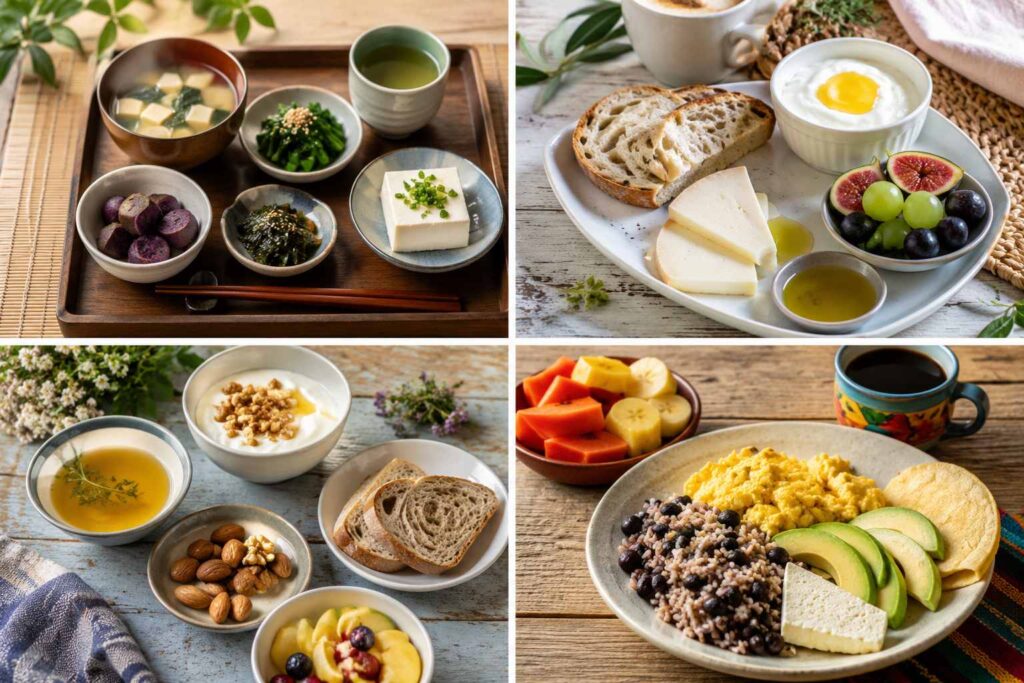
A few years ago, I found myself watching a documentary about the so-called “Blue Zones” – regions of the world where it’s relatively common for people to live well into their hundreds.
As someone who’s always been curious about food and nutrition, the first thing I wondered was: what do they eat for breakfast?
Breakfast is probably one of the most debated meals of the day.
Some people believe it’s essential.
Others prefer to skip it altogether.
Some start the day with toast, others with fruit, others with eggs…
So I became curious to discover how people who have spent a lifetime eating traditional foods actually begin their day.
I thought I might discover a magical food.
A secret ingredient.
Or a traditional recipe that somehow explained their remarkable longevity.
But what I found was something quite different.
What Are the Blue Zones?
The term Blue Zones refers to regions of the world where an unusually high number of people live to 100 years of age or beyond while maintaining a good quality of life.
The concept was popularised by Dan Buettner, American researcher and author, who studied several populations known for their exceptional longevity.
These include Okinawa (Japan), Sardinia (Italy), Ikaria (Greece) and the Nicoya Peninsula (Costa Rica).
It’s worth mentioning that, in recent years, some researchers have questioned aspects of the methodology used and the reliability of certain age records. Even so, exploring the traditional eating patterns and lifestyles of these communities remains a fascinating source of inspiration.
Because beyond the statistics, they all seem to share something worth paying attention to: a way of eating based on simple foods, traditional recipes and habits maintained throughout a lifetime.
So, rather than looking for the perfect breakfast, let’s take a journey through these four remarkable places and discover how they traditionally start the day.
1. Okinawa (Japan): Starting the Day with Vegetables
When we think of a Japanese breakfast, many of us imagine something very different from our usual toast or bowl of cereal.
And, in many ways, it is.
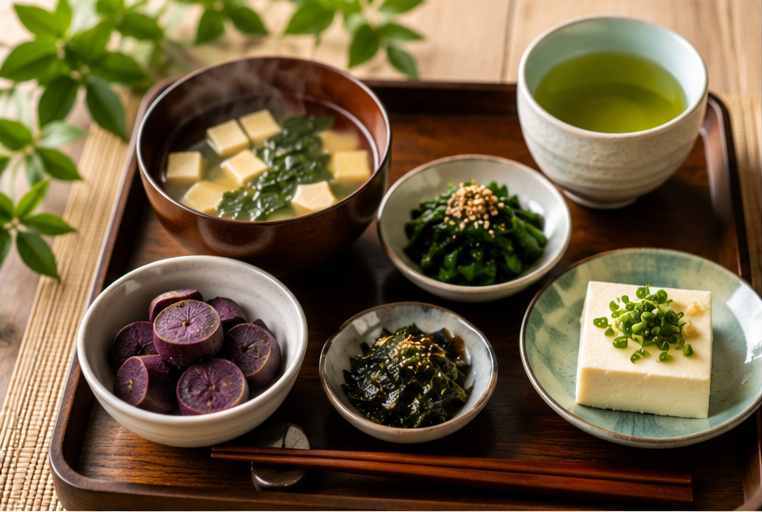
On the island of Okinawa, breakfast traditionally looks much more like a light savoury meal than a typical Western breakfast.
It’s common to find:
- Miso soup
- Tofu
- Purple sweet potato (traditionally one of the staple foods of Okinawa)
- Cooked vegetables
- Seaweed
- Green tea
It may seem surprising that sweet foods are largely absent, but it actually makes perfect sense.
This type of breakfast is rich in fibre, provides plant-based protein and relies on minimally processed foods that release energy steadily throughout the morning.
Okinawa is also well known for the philosophy of Hara Hachi Bu – a traditional practice that encourages people to stop eating when they feel about 80% full.
It’s not a diet, but rather a way of approaching food that promotes slower eating and greater awareness of our natural hunger and fullness cues.
What Can We Learn from Okinawa?
You certainly don’t need to eat miso soup every morning to take inspiration from Okinawa.
Perhaps the most valuable lesson is that breakfast doesn’t have to be sweet.
Including vegetables, protein and minimally processed foods can be a wonderful way to start the day.
2. Sardinia (Italy): The Flavours of the Mediterranean Diet
If Okinawa feels a world away, Sardinia is perhaps a little closer to home.
This Italian island, famous for its remarkable number of centenarians – particularly men – offers a breakfast that perfectly reflects the Mediterranean way of eating.
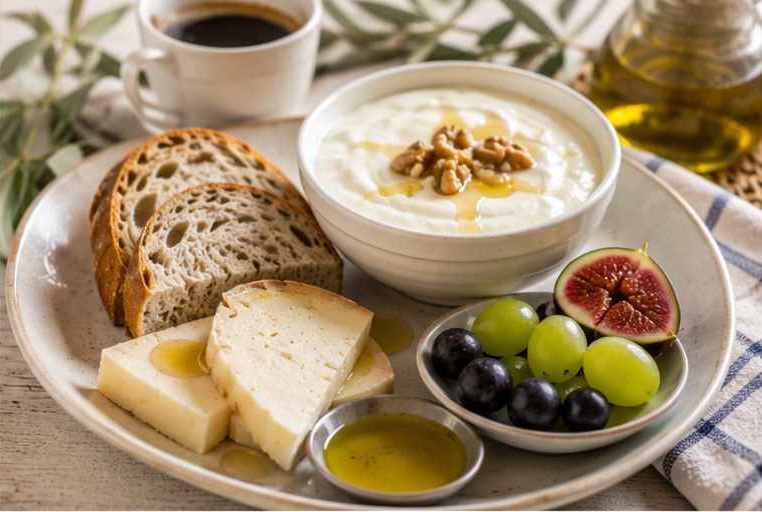
Depending on the season and the area, a traditional breakfast may include:
- Bread made from traditional flours
- Sheep’s or goat’s cheese
- Yoghurt
- Fresh seasonal fruit
- Extra virgin olive oil
- Coffee or milk
It’s not an elaborate or particularly large breakfast.
Instead, it’s built around simple, local foods that have been part of Sardinian life for generations.
Rather than focusing on individual nutrients, the emphasis is on making the most of what the local environment provides throughout the year.
What Can We Learn from Sardinia?
Perhaps that the quality of our ingredients matters far more than the complexity of our breakfast.
Good bread, fermented dairy, seasonal fruit and a drizzle of extra virgin olive oil can create a nourishing breakfast without relying on ultra-processed foods or so-called “superfoods”.
3. Ikaria (Greece): Simplicity and Seasonal Produce
The Greek island of Ikaria is another place where exceptional longevity has fascinated researchers and food writers for many years.
And once again, there’s nothing extraordinary about breakfast.
Instead, it’s built around simple foods, many of them grown in family gardens or sourced from local producers.
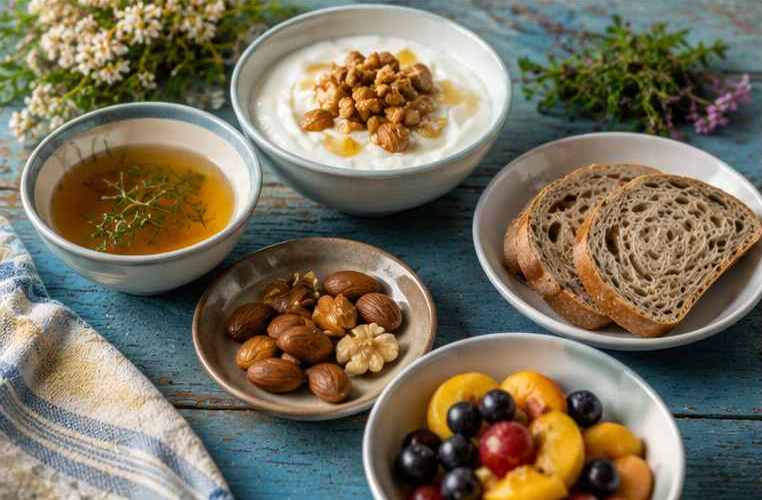
A traditional breakfast might include:
- Wholegrain or sourdough bread
- Goat’s yoghurt or cheese
- Local honey
- Seasonal fruit
- Walnuts or almonds
- Herbal infusions made from wild herbs such as sage, rosemary or chamomile
It’s a breakfast that naturally combines fibre, healthy fats and protein, but above all, it reflects a way of eating that’s closely connected to the seasons.
The focus isn’t on finding the perfect food, but on making the most of what the local environment has to offer throughout the year.
What Can We Learn from Ikaria?
Perhaps that we often make healthy eating far more complicated than it needs to be.
A breakfast built around fresh, seasonal and minimally processed foods can provide everything we need without relying on exotic ingredients or expensive health products.
4. Nicoya (Costa Rica): A Breakfast That Fuels the Day
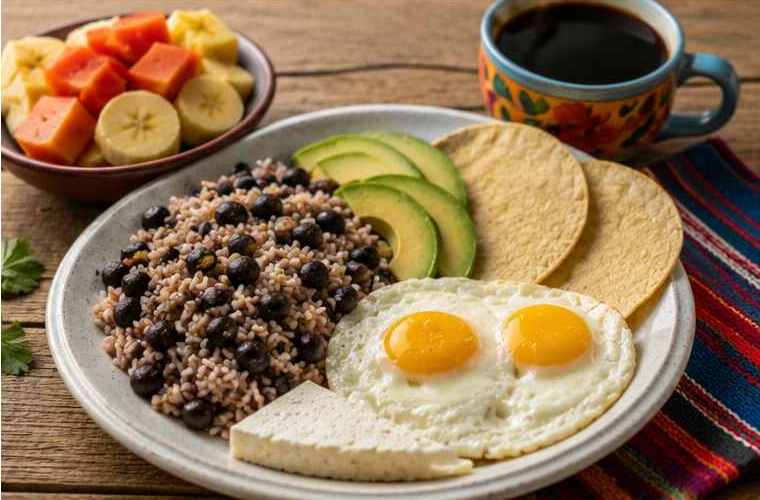
If we travel to the Nicoya Peninsula in Costa Rica, we find what is probably the most substantial breakfast of the four.
And also one of the most balanced.
The star of the meal is usually gallo pinto, a traditional dish made from rice and black beans, often served with:
- Eggs
- Maize tortillas
- Fresh cheese
- Avocado
- Tropical fruit such as papaya, mango or banana
- Coffee
From a European perspective, it may seem like quite a generous breakfast.
But it’s also naturally rich in fibre, plant protein, complex carbohydrates and healthy fats.
It provides sustained energy for a physically active morning, which has traditionally been part of everyday life in this region.
What Can We Learn from Nicoya?
That a nourishing breakfast doesn’t have to be light.
What really matters isn’t the size of the meal, but the quality of the ingredients and whether the breakfast suits a person’s lifestyle, physical activity and individual needs.
What Do All These Breakfasts Have in Common?
After travelling through four very different parts of the world, it’s fascinating to see that none of these breakfasts actually looks the same.
And yet, they all share some remarkably similar principles.
They all include:
- Fresh, minimally processed foods
- A strong emphasis on plant-based ingredients
- Plenty of fibre from vegetables, fruit, legumes or wholegrains
- A source of protein, whether plant or animal
- Healthy fats from foods such as olive oil, nuts or avocado
- Local and seasonal produce
- Very few ultra-processed foods
- Very little added sugar
And perhaps there’s something even more important.
None of these communities appears to eat breakfast in search of a “superfood” or the latest nutrition trend.
They simply eat foods that are part of their culture, their environment and their everyday lives.
What Can We Learn?
The most valuable lesson isn’t to copy these breakfasts exactly.
Very few of us are likely to make miso soup every morning or prepare gallo pinto before heading to work.
What really matters is the philosophy behind them.
We can all aim to include more fresh foods, a source of protein, plenty of fibre and fewer ultra-processed products in our own breakfasts.
And, whenever possible, take the time to enjoy that moment without rushing.
Because, in the end, the habits we repeat every morning for years are likely to have a far greater impact than any single food ever could.
Conclusion
When I first started looking into what the world’s longest-lived people eat for breakfast, I expected to find one special food.
Perhaps a single ingredient they all had in common.
Or a traditional recipe that somehow explained, at least in part, why so many people in these communities live such long and healthy lives.
But I didn’t find any of those things.
Instead, I found breakfasts that were remarkably different from one another.
In Japan, a bowl of miso soup with vegetables and tofu.
In Italy, bread, cheese and seasonal fruit.
In Greece, yoghurt, honey and nuts.
In Costa Rica, rice, beans and eggs.
There isn’t one perfect breakfast for a long life.
What these communities do seem to share is a remarkably similar approach to food.
Real food.
Simple ingredients.
Local and seasonal produce.
Very few ultra-processed foods.
And habits that are repeated day after day, year after year, throughout an entire lifetime.
Perhaps that’s the most valuable lesson of all.
We don’t need to copy exactly what people eat in Okinawa or Nicoya.
Instead, we can take inspiration from their way of eating and prepare breakfasts that are a little simpler, a little more natural and a little more connected to real food.
Because, in the end, good health rarely depends on one perfect breakfast.
It’s much more likely to be shaped by the small habits we repeat every morning for years.
Glossary
Blue Zones: A term used to describe several regions of the world where an unusually high proportion of people live to 100 years of age or beyond. Although the concept has been questioned by some researchers, it remains a valuable starting point for exploring traditional eating patterns and lifestyles.
Hara Hachi Bu: A traditional Okinawan phrase meaning “eat until you’re about 80% full”. It encourages mindful eating and paying attention to the body’s natural feelings of hunger and fullness.
References
- The Blue Zones: Lessons for Living Longer From the People Who’ve Lived the Longest by Dan Buettner.
- National Geographic Society. Articles and features on the Blue Zones and traditional dietary patterns.
- World Health Organization (WHO). Healthy Diet.
- Harvard T.H. Chan School of Public Health. The Nutrition Source.
- Willett, W. et al. Food in the Anthropocene: the EAT–Lancet Commission on Healthy Diets from Sustainable Food Systems. The Lancet (2019).
- Observational studies on the traditional dietary patterns of Okinawa, Sardinia, Ikaria and the Nicoya Peninsula.