
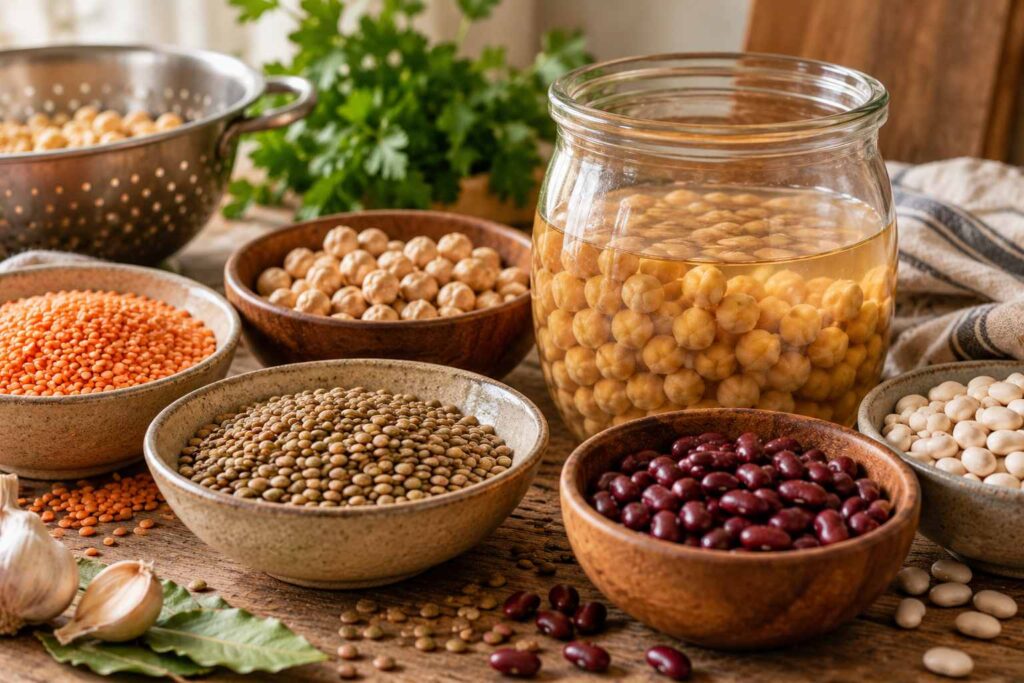
“Knowing how to prepare good food is just as important as choosing it.”
— NourishMum
I have to admit that I’ve never been particularly fond of pulses.
I ate them as a child because they were served at home, but when I started cooking for myself, they practically disappeared from my diet. It wasn’t a conscious decision and I had nothing against them. I simply didn’t particularly fancy them and, given the choice, I would choose other foods.
But when my children were born, I started looking at food differently.
I wanted them to try everything and to become familiar with different foods before deciding whether or not they liked them. And that is when pulses found their way back into my kitchen.
I’m not going to pretend it has been easy.
In fact, they are probably one of the foods I have found most difficult to introduce to them just as they are. A bowl of lentils or chickpeas doesn’t always generate quite the same enthusiasm as other foods.
But little by little, I have found different ways of preparing them. And I have also learnt something that I hadn’t really considered before: with pulses, it isn’t only what we eat that matters, but also how we prepare them.
Soaking them, cooking them properly and even sprouting or fermenting them changes some of their characteristics.
And perhaps our grandmothers, who left chickpeas soaking overnight without talking about phytates or enzyme inhibitors, were already doing something rather sensible.
What do pulses actually provide?
Lentils, chickpeas, beans, peas and other pulses are nutritionally interesting foods.
They provide plant protein, complex carbohydrates, fibre, minerals and a variety of bioactive plant compounds.
They also tend to have a relatively low glycaemic index, and their combination of fibre, protein and starch means they can form part of very complete meals. Clinical trials have found some favourable effects on factors such as LDL cholesterol and blood glucose control, although the evidence as to whether eating more pulses alone reduces the long-term risk of cardiovascular disease or diabetes is less conclusive.
That is why I prefer not to present them as some kind of miracle food.
They are simply a traditional, nutritious, affordable and incredibly versatile food that can quite happily have a place within a varied diet.
But they also have one particular characteristic.
A seed is designed to survive until it finds the right conditions to germinate.
And that helps explain some of what happens when we eat it.
The famous ‘antinutrients’
The word can sound rather alarming.
Antinutrients.
It makes them sound like something we really shouldn’t be eating.
But it isn’t quite that simple.
Pulses naturally contain different substances classified as antinutritional factors, including phytates, lectins, tannins and protease inhibitors, such as trypsin inhibitors.
Why are they given this name?
Because some of them can interfere with certain nutritional processes.
Phytates, for example, can bind to minerals such as iron, zinc and calcium and partially reduce their absorption.
Trypsin inhibitors can interfere with the action of enzymes involved in protein digestion.
But that doesn’t mean we need to become obsessed with removing every last phytate from our diet.
Many of these compounds are also being studied for their potential beneficial effects and occur naturally in many plant foods.
So I think it is more useful to think of antinutrients as compounds that can influence digestibility and the availability of certain nutrients, rather than simply classifying them as good or bad.
And this is where something as simple as a bowl of water comes in.
What happens when we soak pulses?
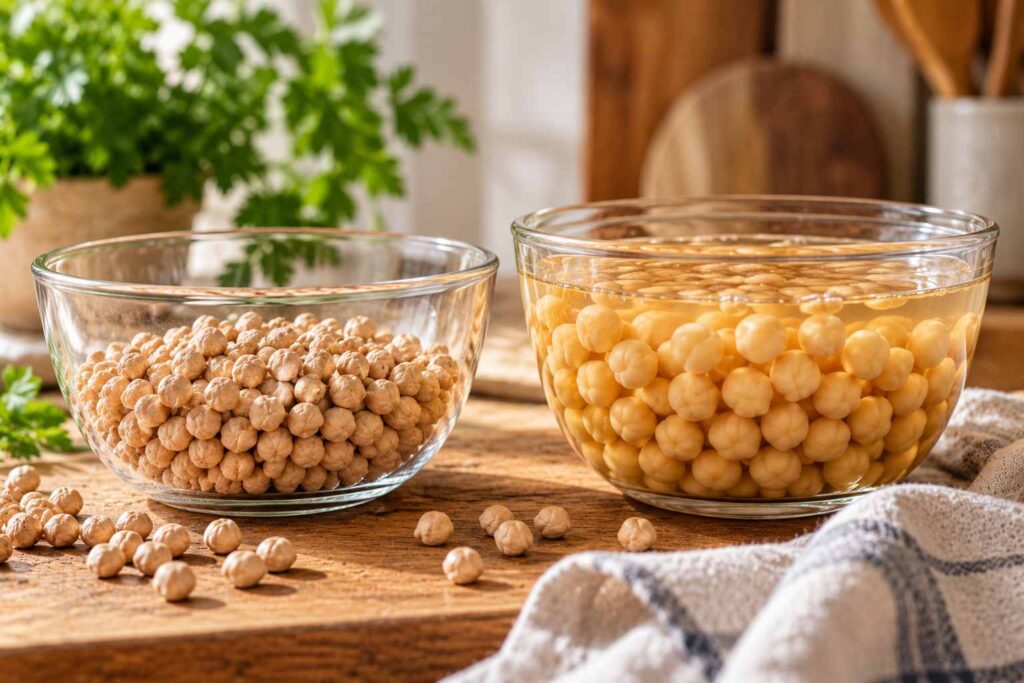
When we leave beans or chickpeas in water for several hours, the first thing we notice is obvious: they absorb water, increase in size and soften.
But more is happening inside the seed.
The water begins processes that prepare the seed for germination, and some soluble compounds pass into the soaking water.
As a result, soaking can reduce, to varying degrees depending on the pulse and the method used, phytates, tannins, some enzyme inhibitors and certain oligosaccharides.
Why do pulses cause wind?
Pulses contain fermentable carbohydrates known as α-galacto-oligosaccharides, including raffinose, stachyose and verbascose.
Our small intestine cannot completely digest them because we do not have enough of the enzyme α-galactosidase.
So they reach the colon.
There, our gut bacteria ferment them and gases are produced during the process.
This helps explain why some people experience bloating or flatulence after eating a portion of pulses.
Soaking can reduce some of these oligosaccharides because some of them pass into the water. In one study involving five Mediterranean pulses, soaking reduced their content by approximately 10% to 40%, depending on the pulse. Cooking produced a further reduction.
So, if our aim is to reduce these compounds, it makes sense to discard the soaking water, rinse the pulses and cook them in fresh water.
That said, it isn’t a magic formula.
Gas production does not depend exclusively on these oligosaccharides, and digestive tolerance varies greatly from one person to another.
Soaking has benefits, but there are nuances too
We sometimes talk about soaking as though it removes everything we don’t want while leaving everything beneficial completely untouched.
It doesn’t quite work like that either.
Some compounds pass into the water, and these can include both substances we may want to reduce and some minerals, phenolic compounds and other soluble nutrients.
In other words, there is a certain amount of exchange.
But soaking has another very practical advantage: it softens pulses and makes their subsequent cooking easier and quicker.
And this brings us to the really important step.
Pulses need to be cooked properly
Soaking helps.
But soaking is not a substitute for cooking.
Heat is particularly important for reducing certain heat-sensitive antinutrients, including lectins and trypsin inhibitors. Proper cooking also changes the structure of starch and proteins and improves digestibility.
This is particularly important with certain beans.
Dried pulses should not simply be eaten after soaking them. They need to be cooked properly until they are completely done.
Perhaps this is another example of traditional methods making a great deal of sense: soaking + fresh water + thorough cooking.
Not because our ancestors understood the chemistry of phytates or lectins, but because generations of cooks had discovered what made these foods more pleasant, safe and easier to eat.
What if pulses still don’t agree with me?
I think this is important because we sometimes turn nutritional recommendations into universal rules.
‘Pulses are healthy, so you have to eat them.’
But just because a food is nutritious doesn’t mean that everyone will tolerate it in the same way.
Someone who hasn’t eaten pulses for a long time may notice more wind or bloating if they suddenly start eating large quantities.
In that case, we can try something quite simple:
- start with small portions;
- choose pulses that we find easier to digest;
- soak them well;
- discard the soaking water;
- cook them until they are really tender;
- and gradually increase the amount.
Red split lentils, for example, may be easier for some people because their outer covering has already been removed.
We can also experiment with different preparations.
Lentil soup, hummus, falafel, dhal or pulses incorporated into a stew may be far more appealing than simply being presented with a plate full of chickpeas.
And this is something I have learnt precisely through feeding my children: introducing a food doesn’t mean we always have to present it in exactly the same way.
Do all pulses need to be soaked?
Not necessarily.
Larger dried pulses — such as chickpeas and many varieties of beans — particularly benefit from soaking because they need to rehydrate and usually require quite a long cooking time.
Lentils, especially smaller or split varieties, can be cooked perfectly well without soaking them first.
Even so, we can soak them if we want to experiment with their digestibility or reduce some of their soluble compounds.
We don’t need to turn it into a rigid rule.
The type of pulse matters.
What about tinned pulses?
They are a perfectly good option too.
Tinned pulses have already been hydrated and heat-treated, so we don’t need to repeat the whole process from the beginning.
We can simply drain and rinse them before using them.
And for a family with little time, having a few tins or jars of chickpeas or lentils in the cupboard can make the difference between preparing a homemade meal in ten minutes and ending up reaching for something much more processed.
Not everything has to be made from scratch in order to eat well.
Do we have to eat pulses?
I don’t think we need to make any individual food indispensable.
We can obtain protein, fibre, minerals and other nutrients from a variety of foods.
But pulses have a lot in their favour too.
They are nutritious.
They are affordable.
They keep for a very long time.
They are part of many of our traditional cuisines.
And they allow us to add variety to our diet.
For me, as someone who is still not the biggest pulse lover in the world, that is probably the best way to look at them.
Not as a food I have to eat because ‘it’s healthy’.
But rather as just another food that is worth knowing how to prepare well, and that adds variety to my diet.
Conclusion
Since my children were born, pulses have found their way back into our kitchen.
Not because I suddenly became passionate about them, but because I wanted my children to have the opportunity to become familiar with them and decide for themselves whether they liked them.
And in the process, I have learnt to appreciate them differently too.
I have learnt that we can transform a food quite considerably with something as simple as water, time and heat.
That antinutrients don’t need to frighten us.
That we don’t all have to digest pulses in exactly the same way.
And that perhaps many of those traditional practices that seemed like simple habits — soaking chickpeas overnight, throwing away the soaking water and slowly cooking them the following day — actually made a lot of sense.
We don’t have to eat pulses every day.
And we don’t have to love them.
But if we decide to include them in our diet, perhaps it is worth doing something we often talk about at NourishMum: not only thinking about what we eat, but also about how we prepare it.
Glossary
Phytates: The main form in which phosphorus is stored in many seeds and pulses. They can bind to certain minerals and partially reduce their absorption.
Lectins: Proteins naturally present in many plant foods. Some lectins found in raw or insufficiently cooked pulses can be problematic, but proper cooking considerably reduces their activity.
Trypsin inhibitors: Compounds that interfere with the activity of trypsin, an enzyme involved in protein digestion. They are sensitive to heat treatment.
Oligosaccharides: Short-chain carbohydrates. Some of those found in pulses are not completely digested in the small intestine and are fermented by bacteria in the colon.
References
- Nutritional and Functional Attributes of Legumes: A Review of Processing Methods and Their Impacts. Comprehensive Reviews in Food Science and Food Safety, 2026. PMC
- Njoumi S. et al. Soaking and cooking modify the alpha-galacto-oligosaccharide and dietary fibre content in five Mediterranean legumes. International Journal of Food Sciences and Nutrition. PubMed
- A review on traditional technology and safety challenges with regard to antinutrients in legume foods. PMC
- Thorisdottir B. et al. Legume consumption in adults and risk of cardiovascular disease and type 2 diabetes: a systematic review and meta-analysis. PubMed
- Urbano G. et al. The role of phytic acid in legumes: antinutrient or beneficial function? PubMed
Pingback: Do We Really Need So Many Supplements? Before Opening Another Bottle, Let’s Talk About Food - NourishMum