
“One cannot think well, love well, sleep well, if one has not dined well.”
— Virginia Woolf, A Room of One’s Own (1929)
When the colder months arrive and the first colds start making their way around, we often hear advice about how to ‘boost our immune system’: take more vitamin C, drink orange juice or try a new supplement.
But what if looking after our immune system had less to do with a quick remedy and more to do with what we eat every day?
Our bodies have an extraordinarily complex defence system. And although no single food can prevent us from becoming ill, there’s an important connection between food and immune health: a varied, balanced diet based mainly on whole and minimally processed foods helps our immune system function properly.
Our Immune System Needs Nutrients, Not Miracles
Our immune system is constantly at work, even when we feel perfectly healthy. To do its job, it needs energy, protein, vitamins and minerals.
Some nutrients play particularly important roles:
- Protein, found in eggs, fish, meat, dairy products and pulses, provides the amino acids needed to produce antibodies and other proteins involved in the immune response.
- Vitamin A, which we obtain from foods such as eggs, dairy products and certain vegetables, helps maintain our mucous membranes, one of the body’s first lines of defence.
- Vitamin C, found in citrus fruits, kiwis, peppers and other fruits and vegetables, supports the normal function of various immune cells.
- Zinc, present in meat, shellfish, eggs and pulses, is essential for the development and normal activity of immune cells.
- Vitamin D, naturally present in relatively few foods, including some oily fish, also plays a role in regulating immune responses.
What’s interesting is that we don’t need to consume these nutrients separately.
A plate of fish with potatoes and vegetables, an omelette served with a salad, or a hearty beef and vegetable stew can provide several important nutrients at once.
And that’s one of the great advantages of a varied diet.
Why Looking After Our Gut Microbiome Matters
Our gut does much more than digest and absorb food. It’s also home to an enormous community of microorganisms that interact with our immune system.
A significant proportion of our immune cells are associated with the gut, where they help distinguish between harmless substances and potential threats.
What we eat influences the composition and activity of our gut microbiome.
Vegetables, fruits, pulses and other plant foods provide different types of fibre that our gut bacteria can use. As these fibres are fermented, substances known as short-chain fatty acids are produced. These play a role in maintaining the intestinal barrier and regulating immune responses.
Fermented foods, such as yoghurt and kefir, can also be part of a healthy diet, although their effects depend on the product and the microorganisms it contains.
Looking after our gut microbiome doesn’t guarantee that we’ll get ill less often, but it is part of supporting both our digestive and immune health.
What About Ultra-Processed Foods?
Not all processed foods are the same. Tinned sardines, frozen vegetables and natural yoghurt can all be perfectly nutritious choices.
The problem arises when much of our diet relies on nutritionally poor ultra-processed products that replace foods rich in protein, fibre, vitamins and minerals.
Some research has also linked dietary patterns high in ultra-processed foods with markers of inflammation and poorer health outcomes.
However, we cannot yet say that all ultra-processed foods directly weaken our immune defences. Their composition varies considerably, and much of the available evidence comes from observational studies.
Rather than worrying about one particular food, it’s more useful to look at our diet as a whole.
We Don't Need to Constantly «Boost» Our Immune System
There’s something important we often forget: a healthy immune system isn’t one that’s permanently more active, but one that responds appropriately when needed.
An excessive immune response can also cause problems, as we see in certain allergies and autoimmune conditions.
That’s why the idea of ‘boosting our immune system’ can be misleading.
What we really want is to provide our bodies with the nutrients and conditions they need to maintain a balanced immune response.
Other factors also play a part, including getting enough sleep, staying physically active, allowing ourselves adequate rest and looking after our emotional wellbeing.
It’s not about constantly stimulating our immune defences, but helping our bodies maintain their natural balance.
Nutrition plays an important role in this process, but it doesn’t work alone.
Back to the Basics
Perhaps the best way to look after our immune health isn’t to search for the next fashionable superfood, but to pay attention to what we regularly put on our plates.
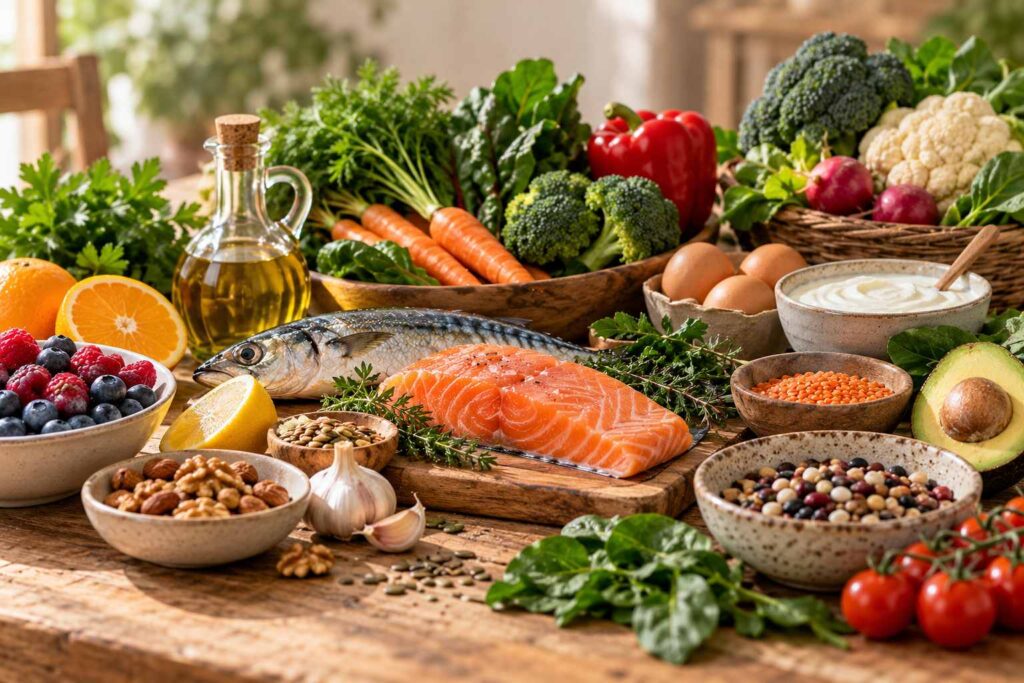
Eggs, fish, meat, seasonal vegetables, fruit, pulses, nuts, olive oil…
Simple foods that, when combined in a varied diet and eaten in appropriate amounts, help meet our bodies’ nutritional needs.
We don’t need every meal to be perfect, nor does every dish have to contain a so-called superfood.
What we eat consistently matters far more than any occasional quick fix.
And that is precisely one of the reasons why it’s worth continuing to choose real food.
References
- NIH Office of Dietary Supplements — Dietary Supplements for Immune Function and Infectious Diseases. An overview of nutrients involved in immune function and the evidence surrounding supplementation.
- Childs, C. E., Calder, P. C. y Miles, E. A. — Diet and Immune Function. Nutrients (2019). A scientific review exploring the relationship between nutrition and the immune system.
- Wiertsema, S. P. et al. — The Interplay between the Gut Microbiome and the Immune System in the Context of Infectious Diseases throughout Life and the Role of Nutrition in Optimizing Treatment Strategies. Nutrients (2021). A scientific review exploring the relationship between nutrition and the immune system.
- BMJ — Ultra-processed Food Exposure and Adverse Health Outcomes: Umbrella Review of Epidemiological Meta-analyses. BMJ (2024). A review of the associations between ultra-processed food consumption and various health outcomes.